Looking for more space in Brooklyn without giving up character, identity, or long-term upside? That is exactly why so many move-up buyers keep circling back to Bedford-Stuyvesant brownstones. If you are weighing the jump from an apartment to a townhouse, this guide will show you why Bed-Stuy stands out, what practical tradeoffs come with ownership, and how to think about the neighborhood through a smart buyer’s lens. Let’s dive in.
Bed-Stuy Brownstones Offer More Than Space
For many move-up buyers, the appeal starts with the streetscape itself. Bedford-Stuyvesant is known for historic residential blocks lined with three- and four-story brownstones, stoops, and small front yards. That setting can feel very different from moving into a larger apartment building because you are not just buying interior square footage, you are buying into a recognizable built environment.
That architectural identity is well documented. The Bedford Stuyvesant and Expanded Stuyvesant Heights Historic District includes about 825 buildings, most of them late-19th-century masonry row houses in styles such as Italianate, neo-Grec, Queen Anne, Romanesque Revival, and Renaissance Revival. More recent landmark activity in the Willoughby-Hart area also supports the idea that Bed-Stuy still has intact brownstone blocks, not just a few standout homes.
For buyers moving up, that matters because the home often becomes part lifestyle choice and part long-term ownership decision. A brownstone can offer a sense of permanence and visual consistency that is harder to find in more mixed building stock. In a city where many buyers compare options block by block, that architectural continuity is a real draw.
Historic Character Feels Tangible
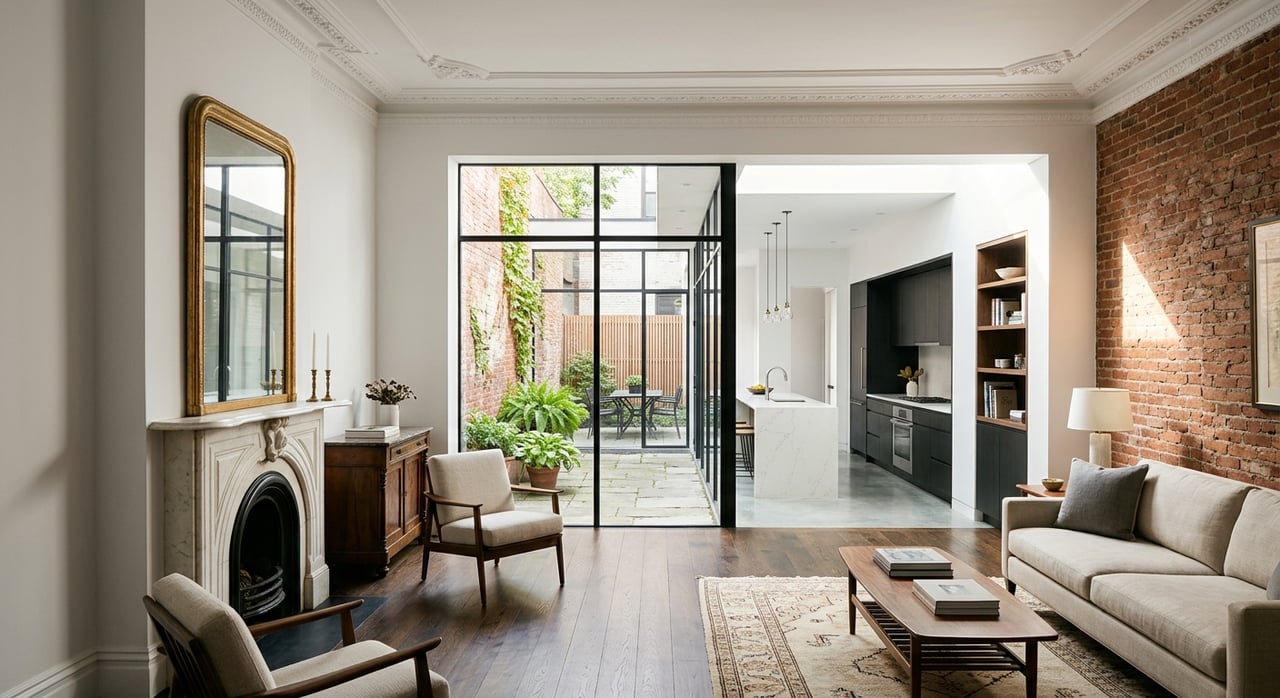
Bed-Stuy’s brownstones are not appealing only because they are old. They are appealing because their original form still shapes everyday living. Stoops, tall windows, formal parlor floors, and layered floor plans create a living experience that feels distinct from a standard condo or rental.
That distinction often matters most to buyers who have outgrown an earlier phase of city living. If you have spent years in a one-bedroom or two-bedroom apartment, a townhouse with clear separation between living, working, and sleeping areas can feel like a meaningful step forward. It is not just more room. It is a different way to use your home.
Layout Flexibility Is A Major Advantage
One of the biggest reasons Bed-Stuy brownstones appeal to move-up buyers is flexibility. Traditional New York row houses commonly center life around a stoop, a parlor floor, and a raised basement or garden level. In some homes, later American Basement layouts move the entry to street level and create a larger, brighter parlor floor.
That kind of structure can open up options that are hard to replicate in an apartment. Depending on the specific house, you may be able to carve out a home office, create a guest area, dedicate space for hobbies, or support multi-generational living more comfortably. Some layouts may also allow for a separate unit configuration, but that depends on the individual property and should never be assumed.
Why This Matters For Move-Up Buyers
When you move up, you are often trying to solve more than one problem at once. You may need extra bedrooms, better storage, room to work from home, or more privacy between shared and quiet spaces. A brownstone’s vertical layout can help meet those needs in a way that feels natural rather than forced.
This is especially relevant in a neighborhood where many households are planning for the long term. According to the NYU Furman Center, 26.9% of Bed-Stuy households had children under 18 in 2023. That does not define every buyer, of course, but it helps explain why homes with multiple levels, additional rooms, and usable outdoor areas continue to attract interest.
Outdoor Space Adds Everyday Value
Outdoor space is not guaranteed with every Bed-Stuy townhouse, but it is often part of the appeal. In the current market, neighborhood listings have featured amenities like backyards, rear decks, roof decks, and roof terraces. For buyers coming from a typical apartment setup, that can be a major upgrade.
Even a modest outdoor area can change how a home functions. It can give you room to entertain, garden, dine outside, or simply have a little breathing room in daily life. For move-up buyers who want the benefits of city living without feeling boxed in, that feature can be a deciding factor.
Outdoor Space Is Property-Specific
It is important to stay practical here. Not every brownstone will have the same amount, quality, or legal setup for outdoor space. Some homes may offer a backyard only, while others might include deck or roof access, and some may have none of the above.
That is why the value is in understanding the individual property, not assuming all Bed-Stuy brownstones offer the same package. A careful home search should focus on how the outdoor space is configured and how it fits your daily priorities.
Bed-Stuy Supports Daily Life Well
A move-up purchase is rarely only about the house. It is also about whether the neighborhood supports your routine over time. Bed-Stuy stands out here because it offers a broad mix of residential character, local services, civic institutions, and commercial corridors.
City assessment materials identify major local corridors including Fulton, Nostrand, Tompkins, Malcolm X, Bedford, and Dekalb. They also point to neighborhood anchors such as Restoration Plaza, the Bedford-Stuyvesant Family Health Center, the Bedford, Marcy, and Macon libraries, Herbert Von King Park, the Billie Holiday Theatre, and Magnolia Tree Earth Center. For buyers thinking beyond the front door, that kind of established infrastructure matters.
Transit Access Offers Multiple Options
Transit is another practical reason buyers consider Bed-Stuy. The neighborhood is served by six subway lines and eight bus routes, with A and C service at Nostrand and Utica, G service at Bedford-Nostrand Avenues, and J and Z stations along Broadway. Because Bed-Stuy is large, access varies by block, so commute times depend a lot on exactly where you buy.
That said, the neighborhood does offer multiple rail options, which can be a real advantage when you are comparing it with other townhouse areas. Buyers should also keep expectations realistic. Some trips into Manhattan can still run around an hour depending on your route and destination.
Bed-Stuy Can Be A Strategic Move-Up Choice
For buyers who want brownstone Brooklyn but are sensitive to price, Bed-Stuy often enters the conversation as a strategic middle ground. It is not a low-cost market, but it can still compare favorably with some nearby brownstone neighborhoods. StreetEasy currently reports a median sale price of $1.3 million and notes that Bed-Stuy townhouses are generally less expensive than those in Fort Greene and Prospect Heights.
That relative positioning helps explain the neighborhood’s appeal. If you are trying to trade up into a townhouse without stretching all the way into the highest-priced brownstone submarkets, Bed-Stuy may offer a more workable path. You still need a strong budget and a clear buying plan, but the value conversation is different here than in some neighboring areas.
Long-Term Ownership Has Been Part Of The Story
There is also a longer ownership narrative in Bed-Stuy that attracts buyers who are thinking ahead. City planning materials describe a neighborhood with a strong tradition of homeownership, and the Furman Center reported a 23.0% homeownership rate in 2023. That same profile notes that residential property values have increased 193% since 2009.
Past growth never guarantees future performance, but those numbers help explain why buyers see Bed-Stuy as more than a lifestyle purchase. For many, it is also a long-term asset decision tied to location, housing type, and scarcity of intact brownstone stock.
Ownership Comes With Real Responsibilities
This is where a smart move-up buyer needs to stay grounded. Bed-Stuy brownstones can be beautiful and flexible, but they also come with maintenance realities. The city’s housing agency notes that nearly two-thirds of homes in the neighborhood are more than 70 years old.
Older homes often require more planning, more due diligence, and a more realistic reserve budget than apartment buyers may be used to. Maintenance is not an occasional surprise in this housing type. It is a core part of ownership.
Preservation Rules Matter In Historic Areas
If you buy in a historic district, exterior changes may require Landmarks Preservation Commission review. According to the city’s Rowhouse Manual, owners should work with the commission when exterior alterations are needed. That can apply to projects involving facades, stoops, windows, and other exterior elements.
For many buyers, this is a fair tradeoff. Historic designation can help preserve the look and rhythm of the block, which is part of what makes these streets so appealing in the first place. At the same time, it means renovation planning should include approvals, timelines, and budget considerations from the start.
Neighborhood Change Adds Another Layer
Bed-Stuy is also a neighborhood navigating change. The city’s housing agency describes the area as rapidly changing, with rising rents and pressure on long-time residents to sell. Its local housing plan includes homeowner support, estate-planning help, education around illegal short-term rentals, and efforts to reduce speculation and deed theft.
For buyers, the takeaway is not to be alarmed. It is to approach ownership with care and respect for the neighborhood’s history and current dynamics. A thoughtful purchase means understanding both the opportunity and the responsibilities that come with owning here.
What Move-Up Buyers Should Focus On
If you are seriously considering a Bed-Stuy brownstone, it helps to evaluate each home through a practical lens. The right purchase is usually the one that balances character with functionality and ambition with realistic planning.
Here are a few smart points to weigh:
- Layout fit: Does the floor plan support how you actually live day to day?
- Condition: How much work is needed now versus later?
- Outdoor space: Is it meaningful for your lifestyle, or just a nice extra?
- Transit access: How does the exact block affect your commute?
- Historic district status: Will exterior rules affect your renovation goals?
- Long-term budget: Are you prepared for maintenance in an older home?
A strong move-up decision usually comes down to alignment. The house should not only look beautiful on day one. It should also make sense for the way you plan to live over the next several years.
For buyers who want a home with presence, flexibility, and a strong sense of place, Bed-Stuy brownstones continue to stand out for good reason. If you are thinking about moving up in Brooklyn and want clear guidance on which properties best match your goals, Gulnara Yunussova can help you navigate the search with thoughtful, hands-on support.
FAQs
Why do Bed-Stuy brownstones attract move-up buyers?
- Bed-Stuy brownstones often appeal to move-up buyers because they combine historic character, multi-level layouts, and, in some cases, outdoor space that can be hard to find in standard apartments.
What makes Bedford-Stuyvesant brownstones different from apartments?
- Bedford-Stuyvesant brownstones often offer separate floors for living, working, and sleeping, along with features like stoops, parlor floors, and garden or basement levels that create more flexible daily use.
Is outdoor space common in Bed-Stuy brownstones?
- Outdoor space is not universal, but current neighborhood listings show that some Bed-Stuy townhouses include backyards, decks, roof decks, or roof terraces.
Are Bed-Stuy brownstones in historic districts?
- Some are, and if a property is in a historic district, exterior changes may require review by the Landmarks Preservation Commission.
What should buyers know about maintaining a Bed-Stuy brownstone?
- Buyers should plan for ongoing upkeep because many homes in Bed-Stuy are more than 70 years old, which makes maintenance and budgeting an important part of ownership.
Is Bedford-Stuyvesant a practical neighborhood for daily life?
- Yes, Bed-Stuy has multiple commercial corridors, civic institutions, parks, libraries, cultural anchors, and several subway and bus options, though commute times vary by block and destination.