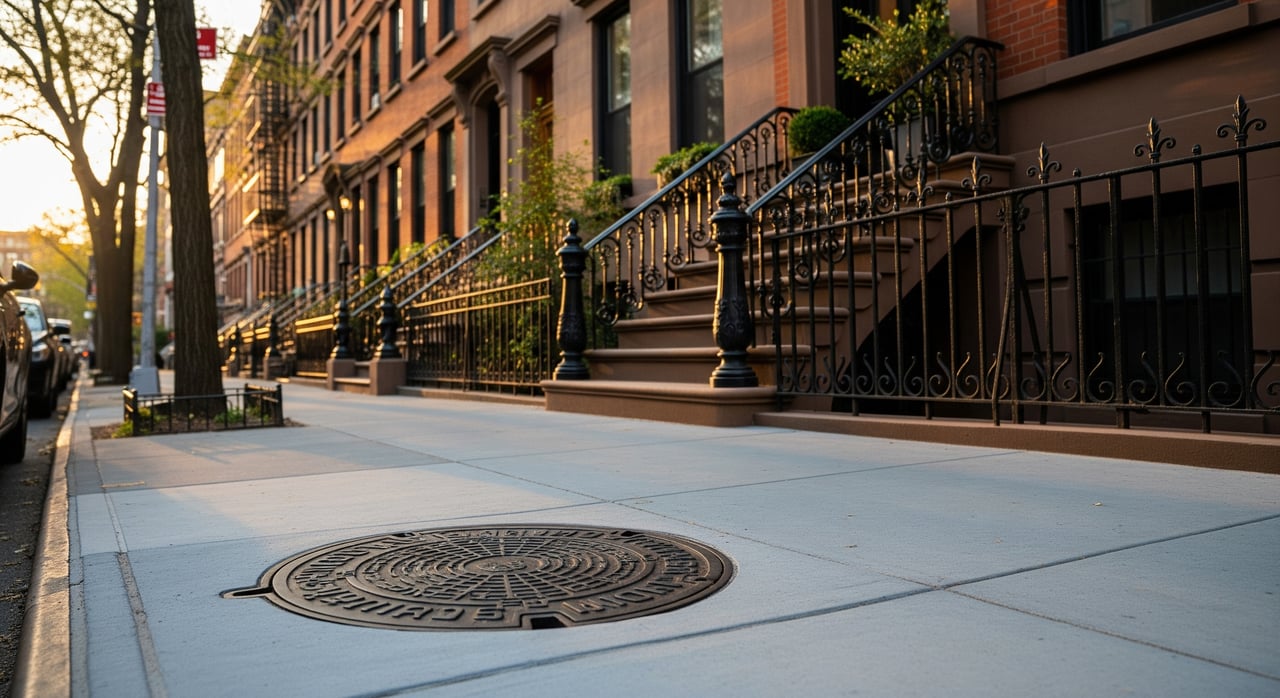
If you own a townhouse or small condo in the West Village, the sidewalk in front of your building is not just a public path. In New York City, you are responsible for keeping it safe, and for what lies beneath it. That can feel intimidating when you get a notice from the city or spot a crack that keeps growing.
This guide explains your duties for sidewalks, sidewalk vaults, and facade safety in plain language. You will learn what permits you need, who to hire, how long things can take, and what happens if you do nothing. You will also get a simple checklist to stay ahead of violations and surprise costs.
Let’s dive in.
What you must maintain on the sidewalk
You are generally responsible for the sidewalk next to your property. That includes broken slabs, trip hazards, and drainage problems that affect the walking surface. You are also responsible for snow and ice removal under local rules.
Your responsibility extends from the curb to your property line. It also includes conditions caused by structures under the sidewalk that support the public way. If a city inspector finds a hazard, you may receive a violation with a comply-by date.
If you fail to act, the city can step in for public safety. The cost of emergency work can be billed to you and may become a lien on your property.
Sidewalk repairs: permits and process
Most sidewalk repairs require permits. Standard concrete replacement often involves permits through NYC DOT. Structural work, vault remediation, and any protective measures like sidewalk sheds typically require DOB permits and coordination. Review current agency guidance before you start.
- Hire a licensed concrete or masonry contractor for slab repairs. Confirm they can coordinate permit filings.
- If there is a structural issue or a vault under the sidewalk, retain a licensed engineer or architect to evaluate and prepare plans.
- Expect the violation or permit to specify a correction period. Timeframes vary by condition and agency.
Failure to correct hazards can lead to civil penalties. In serious cases, the city can complete emergency repairs and add the cost to your tax bill as a lien.
Sidewalk vaults explained
A sidewalk vault is a cellar-like space beneath the sidewalk, common on older West Village blocks. When vaults deteriorate, the sidewalk above can sink or open. That creates a public safety risk and can trigger immediate enforcement.
Owners are responsible for vault safety. If a vault is compromised, expect to provide an engineering evaluation and a plan to remediate. Common options include filling and slabbing over the space, building new structural support, or reinforcing existing construction.
Vault work nearly always requires DOB permits and engineer-signed plans. DOT approvals are usually needed for work in the public way. If work requires a sidewalk closure or shed, you must install protections and obtain permits in advance.
Costs vary widely. Simple slab replacement is not a good proxy for vault projects, which can involve utilities, structural reinforcement, and longer permitting.
Facade rules for taller buildings
New York City’s Facade Inspection & Safety Program, often called Local Law 11 or FISP, applies to buildings greater than six stories. A qualified architect or engineer must inspect exterior walls and file a formal report with DOB on a set cycle. Learn more from the city’s official Facade Inspection & Safety Program guidance.
Inspectors classify conditions as Safe, Safe With a Repair and Maintenance Program, or Unsafe. Unsafe findings require immediate protection, often a sidewalk shed, and prompt repair filings. Safe With a Repair and Maintenance Program still requires you to fix issues within a defined timeframe after filing.
Most West Village townhouses are under the height threshold and do not file FISP reports. You still must address any facade hazards. If DOB identifies a dangerous condition, you must act quickly and install protection where required.
Historic district and West Village factors
Many West Village blocks are within historic district boundaries. If your project changes visible building features or the frontage, you may need approval from the Landmarks Preservation Commission. Check LPC requirements early to avoid delays.
West Village streets are narrow and busy. Getting a sidewalk shed in and scheduling concrete pours can be more complex than in other neighborhoods. Build time in for logistics, deliveries, and coordination with neighbors.
Practical checklist for owners
- Step 1: Inspect and document
- Walk the sidewalk and facade. Note cracks, spalling, loose materials, water intrusion, and any soft spots over a vault.
- If your building is greater than six stories, confirm your FISP cycle and schedule your inspection with a licensed professional.
- Step 2: Hire the right team
- Sidewalk slabs: licensed concrete contractor with NYC sidewalk experience.
- Vaults or structural issues: licensed professional engineer to evaluate and design repairs.
- FISP inspections: qualified exterior-wall inspector, either a licensed architect or engineer with FISP experience.
- Step 3: File permits
- Determine whether you need DOT permits, DOB permits, or both. Expect DOB filings and signed plans for vault and facade work.
- If a sidewalk shed is required, obtain permits and install it promptly.
- Step 4: Execute repairs
- Follow the dates on violation notices and any FISP directives. Use temporary protection when needed to keep the public safe.
- Coordinate early with utilities if your vault or sidewalk work could affect service lines.
- Step 5: Keep records
- Save inspections, permits, drawings, contracts, and invoices. These help with closings, refinancing, and any future disputes.
- Step 6: Budget smartly
- Get multiple bids. Include engineering, permits, expediting, traffic control, utility coordination, and temporary protections in your budget.
Budget basics: what drives cost
- Scope and access: More slabs, thicker sections, or complex corners increase price. Limited staging areas can add labor and traffic-control costs.
- Vault complexity: Structural remediation and utility coordination can push a project from thousands into much higher ranges.
- Temporary protections: Sidewalk sheds and site safety measures add cost, especially on narrow West Village streets.
Expect small patching or limited slab replacement to start in the low thousands. Multi-slab replacements often land in the mid-to-high four or five figures. Vault remediation can reach much higher depending on structure and utilities. Get detailed, written estimates.
How to avoid violations and claims
- Inspect seasonally and after storms. Look for ponding water, lifted edges, or new cracks.
- Address hazards early. A small repair today can prevent a violation and a larger project later.
- Respond quickly to any notice. Correction periods are short, and delays increase risk and cost.
- Keep insurance updated. Confirm your coverage for sidewalk-related claims.
Who does what on your project
- Licensed contractor: Installs slabs, curbs, and standard concrete work that meets city specs. May help with permit logistics.
- Licensed engineer or architect: Evaluates structural issues, designs vault and facade repairs, and submits DOB filings.
- Expediter: Coordinates filings and approvals when your engineer or contractor does not handle them.
If you receive an Unsafe facade finding, expect immediate protections like a sidewalk shed while you complete design and permanent repairs.
Helpful city resources
- Review the city’s Facade Inspection & Safety Program guidance for buildings greater than six stories.
- See NYC DOT information on sidewalk maintenance and permitting for work in the public right of way.
- Check the Landmarks Preservation Commission site if your property is in a historic district.
Ready to plan your next step?
If you own in the West Village, staying ahead of sidewalks, vaults, and facades protects your neighbors and your property value. If you are thinking about selling or improving your home, you can plan the timing of repairs to support your goals and avoid surprises at contract or closing.
Have questions about how these rules affect your sale or purchase plan in Manhattan or Brooklyn? Connect with Gulnara Yunussova of The Azani Team at Compass for a friendly, no-pressure conversation. We can help you map next steps and introduce you to licensed local professionals. Schedule a free consultation.
FAQs
Who pays for sidewalk repairs in the West Village?
- The adjacent property owner is responsible for maintaining and repairing the sidewalk and any vault beneath it, including related permit and construction costs.
What is a sidewalk vault and why does it matter?
- A sidewalk vault is an enclosed space under the sidewalk. If it deteriorates, the sidewalk above can fail, leading to violations, emergency work, and potential liens if the city steps in.
Do West Village townhouses need Local Law 11 facade inspections?
- Only buildings greater than six stories must file FISP reports. Most townhouses are below that threshold, but owners must still fix hazardous facade conditions if identified.
How long do I have to fix a sidewalk or facade violation?
- Correction periods vary by agency, condition, and notice. Your violation will state a comply-by date. Act quickly to avoid penalties and emergency city work.
Who should I hire for a vault or facade problem?
- Retain a licensed professional engineer or registered architect for evaluation and plans, then a contractor experienced with NYC standards to perform the work.
What happens if I ignore an unsafe condition?
- You can face civil penalties, emergency work ordered by the city, and costs that become a lien on your property. Delays also increase injury risk and insurance exposure.